
By Matthew Coller
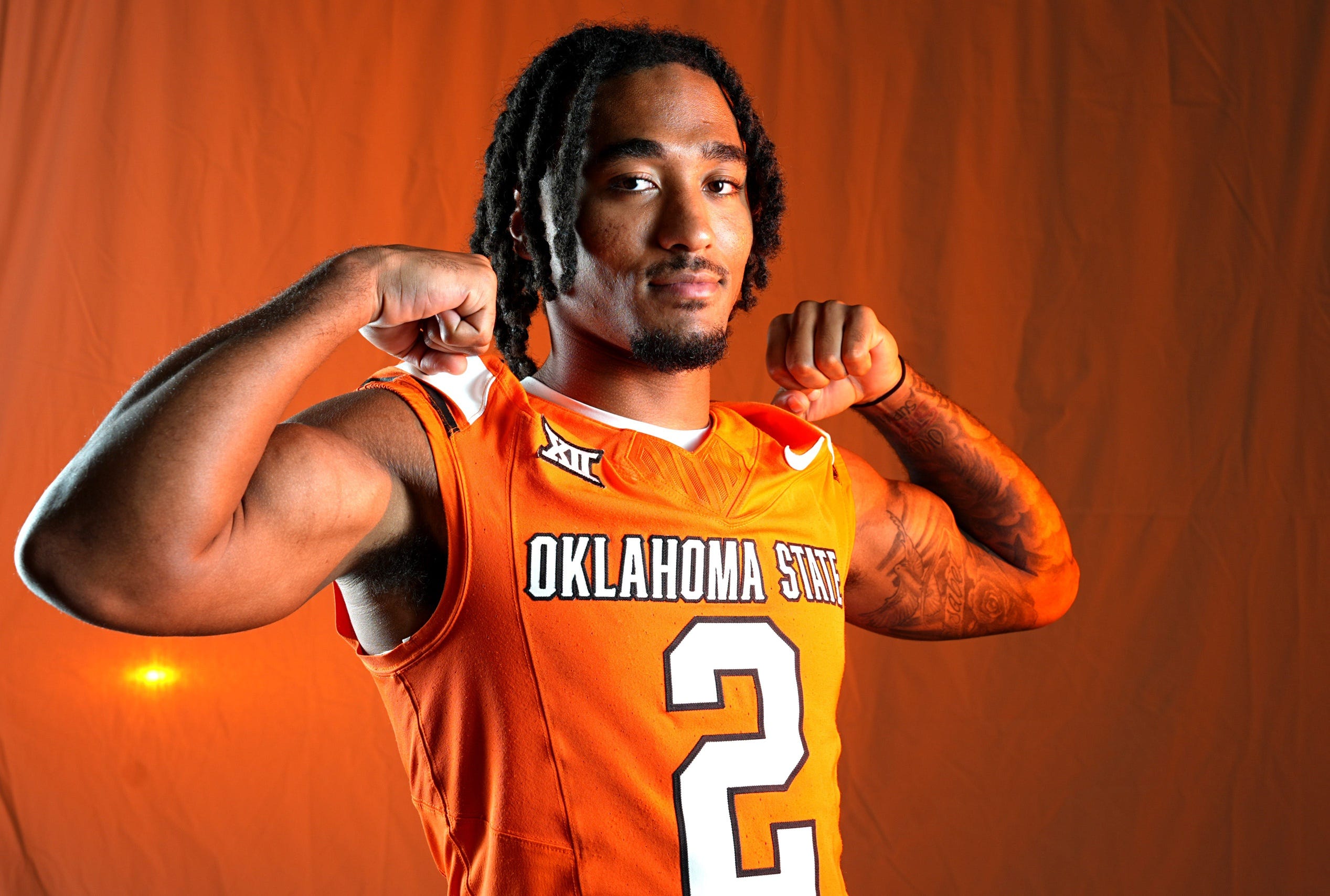
On May 15, the Minnesota Vikings signed wide receiver Terrill Davis.
The addition to their 90-man roster didn’t make the ESPN ticker or get an Ian Rapoport tweet. They didn’t debate it on Get Up or put it on the front page of the New York Times. Locally it was noted but not explored much.
When you pull up his stat line from 2025 at Oklahoma State, the lack of reaction is reasonable. Davis caught 29 passes for 373 yards.
His pro day measurables don’t jump off the page either. He is a hair under 5-foot-11, has 29-inch arms and a hand size that you would expect from an accountant. His 40 time doesn’t wow you and he didn’t look like James Harrison when doing the bench press.
If we are being honest, when the Vikings take the field at TCO Performance Center on July 28, Davis is their longest longshot. He doesn’t have measureables or a D-I production resume that would suggest that he has high odds to stick.
Yet the history of the Vikings and the NFL suggests that there are always longshots that become outlier NFL players. Did you know that Adam Thielen went to Mankato? You remember that John Randle played his college ball at Texas A&M–Kingsville Javelinas?
Of course, outliers don’t always have to become legends to still be an incredible story. Last year Morgan State defensive tackle Elijah Williams was signed after a rookie minicamp tryout. In 2020, the Vikings signed track athlete Dan Chisena, who only had three college receptions, and he made the team as a punt gunner.
That’s the beauty of NFL training camp. As long as you have a helmet, you have a chance.
The reason Davis is in Minnesota for training camp despite not having Megatron-like size or Jefferson-like numbers is that his path to the NFL is unique.
At Choctaw High School, Davis was a basketball player and a basketball player only. By his junior year, he was ranked as the 24th best baller in the state of Oklahoma by MaxPreps. He played on a highly successful AAU team that featured a current NBA player Trey Alexander.
Despite leading his team in points and assists, he didn’t have the D-I offers to play basketball that you might expect. A 39-inch vertical may not have been enough to convince folks that a 5-foot-11 point guard could handle the power conferences.
He was hoping to crush his senior year and get an opportunity to play somewhere when the pandemic hit and shut down gyms. In order to stay in shape, he started doing football workouts with some of his friends on the team. A couple of things struck him: He was good and football is fun.
Choctaw football coach Jake Corbin had been prodding Davis for years to come out for the football team because he had seen Davis’s athleticism on the basketball court.
“We tried to talk him into it every year,” Corbin told Purple Insider over the phone.
Davis finally agreed to play football.
Still having aspirations as a basketball player, Corbin made him a deal: Whenever basketball things come up during the season, make that your priority. Shoot when you need to shoot and give the football team as much as you can.
Not only did he pick it up almost instantly, Davis also fell in love with football.
“He just absolutely took to it so fast, it was unreal,” Corbin said. “Obviously he took some coaching, but I’ll give him all the credit in the world for his athleticism and being a smart player.”
In Choctaw’s third district game, he caught nine passes for 209 yards against the team that eventually went on to win the state championship and Davis helped lead the team to its second ever state championship appearance.
“He was just unguardable,” Corbin said. “A lot of 50-50 balls that he’s coming down with, like, ‘geez, this guy is not scared at all.’ It became very evident that he was going to be that guy.”
While Davis was a natural at football, that doesn’t mean they could just toss some pads on him and start hucking footballs in his direction. Football in Oklahoma is way too good for that. He worked hard with the coaching staff on the technical elements of the wide receiver position. It’s quite different than one-on-ones with your buddies after school and they had to start from square one.
“You’re like, ‘this is a fade, this is a corner, this is a dig, this is a curl, et cetera,’ and you start teaching those, and you’re like, this is what we’re calling this, this is how it’s layered,” Corbin explained. “You just kind of go there from a holistic approach and then continue from the getting down to the footwork, the releases, all that kind of stuff, which all that was pretty natural for him.”
“I can teach the same to 100 kids, and they’re not going to come out with the same outcome that he did,” Corbin said. “It just made a lot of sense to him.”
It wasn’t just Davis’s natural athleticism and his ability to adapt quickly that impressed coach Corbin. As Corbin had been watching him play basketball, he thought that Davis had a little football to his game. At his size, he had to fight extra hard for every edge and Corbin figured that could translate nicely to the gridiron. When Davis actually got into the football program, it turned out his mentality was tailor made for football.
”Watching him on the court, he was a tough kid and you could tell that like he had a degree of toughness where he wanted the ball in his hands when the pressure was on all those kind of things,” Corbin said. “So you could see that and I felt like he had a football player’s mentality when he was playing basketball and I thought it could transition to football. Did I know at the time that he would be in the NFL? No. That’s a pretty long shot, but it was not shocking to me that he was a good high school football player.”
Davis decided after his senior year that that he would continue his sports career in football.
But putting together an impressive season as a senior was not enough to garner Davis much attention at the Division-I level. After all, most colleges are focused on players who are juniors and sophomores when they are recruiting. By the time you’re a senior, it’s too late. Not to mention that the measurables were still working against him in football.
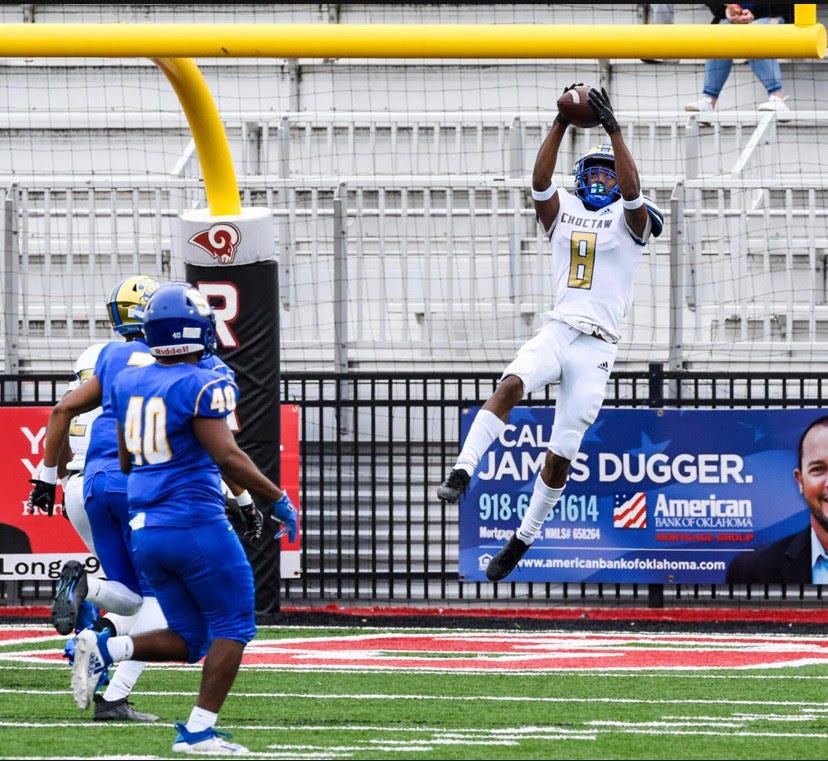
He landed at Division-II Central Oklahoma. His first year was rough. He was redshirted in 2021 so he wasn’t able to play in games and his mom told The Colly that he was not enjoying the atmosphere in the same way that he did in high school.
Davis might have chosen to leave football if not for a coaching chage at UCO. The university hired Adam Dorrel, who had gone 76-8 at Northwest Missouri State and then coached at D-I Abilene Christian. Dorrel brought a different vibe to the program and that clicked with Davis.
Dorrel didn’t realize that he was inheriting a player who would eventually dominate the D-II level. And that took a long time to manifest itself. When Dorrel first took the job, all he knew about Davis was that he was a good athlete.
“When we did an eight week training cycle, we tested and it was like right away, his testing numbers were really, really, really good,” Dorrel told Purple Insider over the phone. “So you’re like, ‘okay, this can be interesting.’”
They were impressed by Davis’s first spring but the team’s quarterback situation was pretty rough. He only finished with 11 catches as a redshirt freshman but things started to show as a sophomore. Davis was starting to get it and ended up leading the team with 43 receptions and 538 yards.
Still, through two seasons as the D-II level, there wasn’t much to suggest that any NFL team would ever come calling.
His junior year, UCO landed a quarterback transer from Houstin. Dorrel knew they could open up the offense at that point and start utilizing everything that Davis could do.
“We just said, ‘man, with the quarterback we have, with Terrill really showing us [his development — we had a couple other guys too, a couple good running backs — we switched our offense and went to up-tempo spread offense,” Dorrel explained. “That really highlighted Terrill’s skills. That spring, I knew if we stayed healthy in the fall — I’ve just been in this league a long time. I just knew we were going to have a chance to be good.”
At the same time, Davis’s knowledge of the game was starting to catch up with his natural ability to run routes and catch the football.
“It was really like a light clicked on for him as far as football, reading defenses, coverages,” Dorrel said. “Obviously, he had continued to get stronger but we really started weaponizing him in the with reverses, short screens, his ability with the ball in his hand is good.”
Everything came together and Davis’s game took off. He finished his junior season leading all NCAA players, regardless of division, with 1,609 receiving yards on 109 receptions and he scored 15 touchdowns. He became the only player in school history with three 200-yard receiving games in a single season.
UCO went 11-2, had the top-ranked offense and won the MIAA conference.
“By the middle of the season, my daughters would go, ‘I know where the ball’s going,’ Dorrel said laughing.
Davis did it all. When they needed a play on third down, they called his number. When they needed a play in the red zone, bang, Davis. They moved him all over the field, field side, boundary side, slot. Teams tried all sorts of different coverages to slow him down and nothing worked.
“I know a lot of the other head coaches and when you’re meeting that two hours before, the head coach or assistant coaches at other schools, some of the first words out of their mouth were like, ‘good Lord,’ Dorrel said. “It was like, we’ve got something. Cat’s out of the bag. [Opponents were saying,] ‘we’re going to try to hold him under 15 catches. Well, I don’t know if we can, but we’re going to try.’ Stuff like that.”
Dorrel said that all the attention directed toward Davis resulted in the team’s run game going off as well. He was the center of an offense that UCO had never seen before.
Along the way, Dorrel took notice of the same thing that his high school coach observed about Davis: His toughness.
“He’s a tough son of a b—,” Dorrel said. “He gets punched in the mouth. He’s not the kid that’s going to stand there and bleed. He’s going to fight back…he was very competitive at practice, never backed down. So we knew he had all that there. We just kept challenging him.”
The area where Dorrel challenged him the most as he was emerging as a star was as a leader.
“He learned how to channel his body language, he learned how to channel that inner beast in a more positive way,” Dorrel said. “I’m just so proud of him. Some kids don’t do that. You can challenge them and challenge them, especially when they’re good players. Sometimes they’re just like, ‘yeah, f— it. I don’t need to do that.’ But he took it upon himself to become a better leader.”
After Davis’s massive season at UCO, he decided to transfer to a Power 4 school. He chose Oklahoma State with the thought that he could become a weapon for a program that has been successful passing the ball for many years under Mike Gundy.
Unfortunately things did not go as expected. The Cowboys struggled mightily in the passing game, throwing for only 174 yards per game as a team and Gundy was fired before the calander even reached October.
Their passing game was so rough that OK State’s leading passer had three touchdown passes. That’s not a typo. Three.
While Davis only had 29 catches, that was the second most on the team, as was his 373 yards.
The tough circumstances kept Davis from having any chance of getting drafted but scouts have their jobs for a reason. The Vikings may be able to find a diamond in the rough because his situation didn’t play out as expected.
But what are Davis’s realistic chances of sticking in purple?
With the recent increase in the number of practice squad positions, grabbing onto a position in the building is much more possible for longshot players than it ever has been before.
If Davis is going to catch the attention of the coaching staff, there is one area where he is going to have to shine.
”Special teams, that’s something I talk to him a lot about his junior year,” Dorrel said. “At our level, when you get a kid as talented as him, we protect him as much as possible. So he did not play a lot of special teams here. Now, I will tell you this. He’s always embraced it.”
Dorrel continued…
“I think he could be a gunner or maybe capitalize on the ability to slip people and go potentially block punts. He’s going to have to make it, in my opinion, the big four on special teams. I’m very confident there’s going to be a want there by him to do that. And there’s enough athleticism there to do that as well.”
In the coming weeks, Davis’s toughness, ability to adapt quickly and patience will be tested. Training camp is a tough place for receivers who aren’t getting very many reps to show what they can do. Oftentimes they have to rise to the occasion and make splash plays during preseason games.
But despite needing to go a long way in order to make a difference, Davis has a helmet so he has a chance. We’ll be keeping an eye on his progress to see if the Vikings can find another gem.
Cool story!
Those guns got nothing on Mr Purple Insider himself.