
By Matthew Coller
Normally if a general manager is going to be fired, the franchise’s ownership or president will either make the call in the middle of the season or the Monday after the year ends. Teams usually quickly put a new GM in place and then they take over operations and set the tone for the following offseason and run the draft process their way.
The Minnesota Vikings’ situation, however, is not going to work like that. Because they parted ways with GM Kwesi Adofo-Mensah on January 30, there was no time for a new GM to be hired and implement a full offseason plan. So in the coming weeks, acting GM Rob Brzezinski will run the front office and then the team will undergo a GM search and the next GM will begin work following the draft.
Already that creates a unique situation because the coaches and current front office members will have set the ship sailing in a particular direction during free agency and the draft, which will have cap and roster-building implications for years to come.
That leads us to plenty of questions. Does the new GM have to be on board with the stage that has been set by the current folks in charge or could they sell ownership on a difference course? Will they be looking for a GM to take full control of the operation or will they be tasked with working to accomplish the goals of head coach Kevin O’Connell?
If you read any of the analysis of Adofo-Mensah’s time as the GM, you might come away thinking the Vikings front office has looked like something out of the show Succession at times over the last four years. How can the Vikings avoid problems with the distribution of decision making in the future? What will GM candidates be asking the owners during the interview process?
For those answers, we turn to former Buffalo Bills general manager Doug Whaley for insight.
Whaley was hired as Bills GM in 2013 after spending 10 years in the Pittsburgh Steelers organization and three years under GM Buddy Nix before being elevated to the lead job. He was the Bills’ GM through April 2017.
I reached Whaley on the phone last week and asked him to take me through what a GM interview is like, what questions would be asked and what issues the Vikings and their new GM will need to work through.
Whaley began the conversation by pointing out that all GM jobs are not the same. Candidates have to prepare for the situation they would be walking into as it pertains to the head coach.
“There’s two different types of interviews,” Whaley said. “There’s an interview where they don’t have a head coach and an interview when they have a head coach. [In Minnesota] you have to tailor it to saying, ‘this is what I see and I want to understand what the coach sees and we can develop a plan together.’”
Whaley continued…
“With a head coach in place and everyone else in place you’re coming in saying, ‘how do I best fit with what’s set up already?’ I think the biggest part of that interview process with Minnesota will be: What do you think our holes are? What do you think our strengths are? What’s your plan to plug those holes? What’s the long-term plan to help us consistently compete for championships?”
Whaley said that the Vikings ownership will likely be interested in the candidates’ previous history of working with coaches. Specifically, how has the power distribution worked?
“Have you always been underneath the coach, above the coach, on the same level as the coach?” Whaley said. “How has that gone?”
It was not made clear in public comments by Mark Wilf following Adofo-Mensah’s firing whether they are looking for someone to have final roster say or work in conjunction with O’Connell. Are the Wilfs looking for a GM with different ideas about where they should go with the future roster build or seeking a leader who is on the same page with O’Connell’s vision? Is the next GM going to oversee and evaluate the head coach or get his groceries?
Whaley said that the Vikings’ owners have to decide whether they are going to keep the rest of the front office in place as well. If they are going to make a major overhaul, then GM candidates must come in with ideas about how they are going to fill the key roles.
“How are you going to build out a scouting staff? You have to talk about the construction of your department,” Whaley said. “Then you have have to answer if everyone is staying or if it’s a clean sweep and you have to think about people that you would be bringing in.”
Whaley thinks that the overhaul route is the way to go when a new GM is hired.
“I would take a hard look at the personnel department and I would probably move on from the majority of them so you have people that you bring in that are fully bought into what you do and how you want it done instead of, ‘I’m used to doing it this way in the past, we used to do it this way,’” Whaley said. “Or guys that are saying, ‘the old boss didn’t appreciate what I do, so I should be promoted.’ There’s a lot of dynamics there. I would clear out most of that staff.”
The decision-making power structure is where the rubber meets the road for Whaley.
In 2022, the Mark Wilf made it clear that he wanted the GM and head coach to work hand-in-hand on the roster build during the O’Connell/Adofo-Mensah era, dubbing it a “culture of collaboration.” Adofo-Mensah also inherited a front office that did not undergo a massive overhaul.
The longtime Steeler exec and ex-Bills GM struggles with the idea that the GM and head coach can share decision-making power.
“Unless you have guys that are really close outside of football, you need to have a clear delineation of power,” Whaley said. “Be it the GM is over the head coach or the head coach is over the GM. If you don’t and it’s two guys that are trying to work together, it can happen but a lot of times it ends up being self preservation.”
Whaley points out that a shared power dynamic did work in Pittsburgh when he was there but said it was due to the strong presence of ownership. He said that it was made very clear to the GM and head coach what the expectations were from the Rooney family and they worked in conjunction to accomplish those goals.
However, the Vikings’ ownership has not been as hands-on. That can often have benefits but the drawback can be finger pointing when multiple people are in charge. The former executive used a parenting metaphor to describe how things can get tricky if the lines are now drawn clearly from the very top.
“There is a difference between not being involved and when you leave the house you tell your kids, ‘I want your rooms clean by the time I get home’ and everybody knows the directive and what needs to be done,” Whaley said. “How you get it done, I’ll judge you on that. If you don’t complete the task, then I know who’s accountable. If you say, ‘I’m going away for a week, kids you can do whatever you want to do,’ then that’s where you get those power struggles.”
Whaley thinks that a well-defined pecking order is the way to go.
“What happens when you guys disagree?” Whaley said. “Who is the tie breaker when you disagree?”
He continued…
“It’s much easier and more accountability when the GM is over the head coach or head coach over the GM. When they are both on the same level, then you can deflect accountability. ‘Well, I drafted this guy because the coaches wanted him.’ Or, ‘we didn’t want him, it was the personnel staff wanted him.’ Instead of: It was my decision as the head coach because I make the calls or it was my decision because I’m the general manager and I make the calls.”
The interesting part of deciding who is going to have the final say on roster decisions is that O’Connell has been in place for four years. His track record includes some very impressive seasons, in particular 2024 when he won Coach of the Year and won 14 games. But he hasn’t tasted postseason victory yet and teams around the NFL aren’t exactly exerting a ton of patience with failure to win in the playoffs these days. Are the Wilfs buying into O’Connell’s direction to the point where he is going to have the final gavel? Or is there pressure on his job if they fail to make the postseason in 2026?
“If you are saying that Kevin O’Connell sets [the culture and roster], then OK everybody falls in line of what Kevin wants,” Whaley said. “But what are you trying to tell the GM? Let’s follow what Kevin does? Or you come in and you set the tone? You tried to do that with the last GM and it didn’t work, so I think it starts more with ownership then who the GM is.”
That brings us to the elephant in the room with the Vikings’ upcoming GM interviews: The quarterback.
The Vikings are in a tricky situation in which JJ McCarthy showed flashes of quality play but struggled overall to stay healthy or play consistently. At the end of the season, O’Connell declared that he wants a “highly competitive” quarterback room, leading to speculation that they may try to replace McCarthy altogether as the starting QB in 2026.
By the time the new GM arrives, the team will have already found either another starter or competition for McCarthy.
Whaley expects the future at QB to be the main subject of what each GM candidate wants to know from the team.
“The first question is: What is your evaluation of JJ McCarthy and what do you see going forward?” Whaley said. “[As the GM candidate] that’s a question you have to ask. What’s Kevin O’Connell’s view of JJ McCarthy? What’s ownership view of JJ McCarthy? Then if you agree or disagree, how do you develop a plan from there?”
When Whaley was in Buffalo, he drafted EJ Manuel in the first round. By Manuel’s second year, it was obvious that he wasn’t going to be the franchise quarterback, so Whaley concocted a long-term plan to find the next first-round pick. He asked his former co-worker in Pittsburgh Ron Hughes, who was the long-time college scouting coordinator and had retired, to investigate when the strongest QB class was coming out in the draft. He got his answer back: 2018. So Whaley went to ownership and laid out a plan to stockpile draft capital, particularly by trading down in 2017, so they could have enough capital to move up in the 2018 draft to take a QB.
If GM candidates are prepared, they will already have the answer to the next strong QB class when they walk in the door, whether KOC wants to stick with McCarthy or not.
“It might be that this year’s draft isn’t high on quarterbacks and the free agent pool stinks, so let’s do something that keeps us in a position with draft capital and cap space to strike in subsequent years,” Whaley said. “If you’re really smart, you can say, ‘I think that the 2028 draft is going to have multiple options at the quarterback position and I think we should look to the next two years to try to get as much draft capital as possible so we have the ammunition to maneuver so no matter where we end up in the first round to go up and get the guy we like.’ You have to make sure that it’s a draft where there are multiple options rather than just one because then you’d have to overspend.”
Whaley said that you can’t underscore the importance of nailing the QB situation for the future, bluntly noting that he would very likely still be the Bills GM if he had nailed the Manuel pick.
He can’t emphasize enough that patchwork options won’t work long term. While his roster building was able to get Buffalo to the postseason with Tyrod Taylor after Manuel went bust, it still wasn’t enough to put them in real contention.
“My misconception was that you could build enough talent on a team until you find that quarterback to compete and get into the playoffs,” Whaley said. “You can but you can’t really be a contender.”
The challenge of the patient approach that Whaley suggests is that the NFL is not patient. If the Vikings sell out their resources to win in 2026 because they haven’t won in the playoffs since 2019 and everyone is getting desperate, the next GM is going to have a tough road ahead.
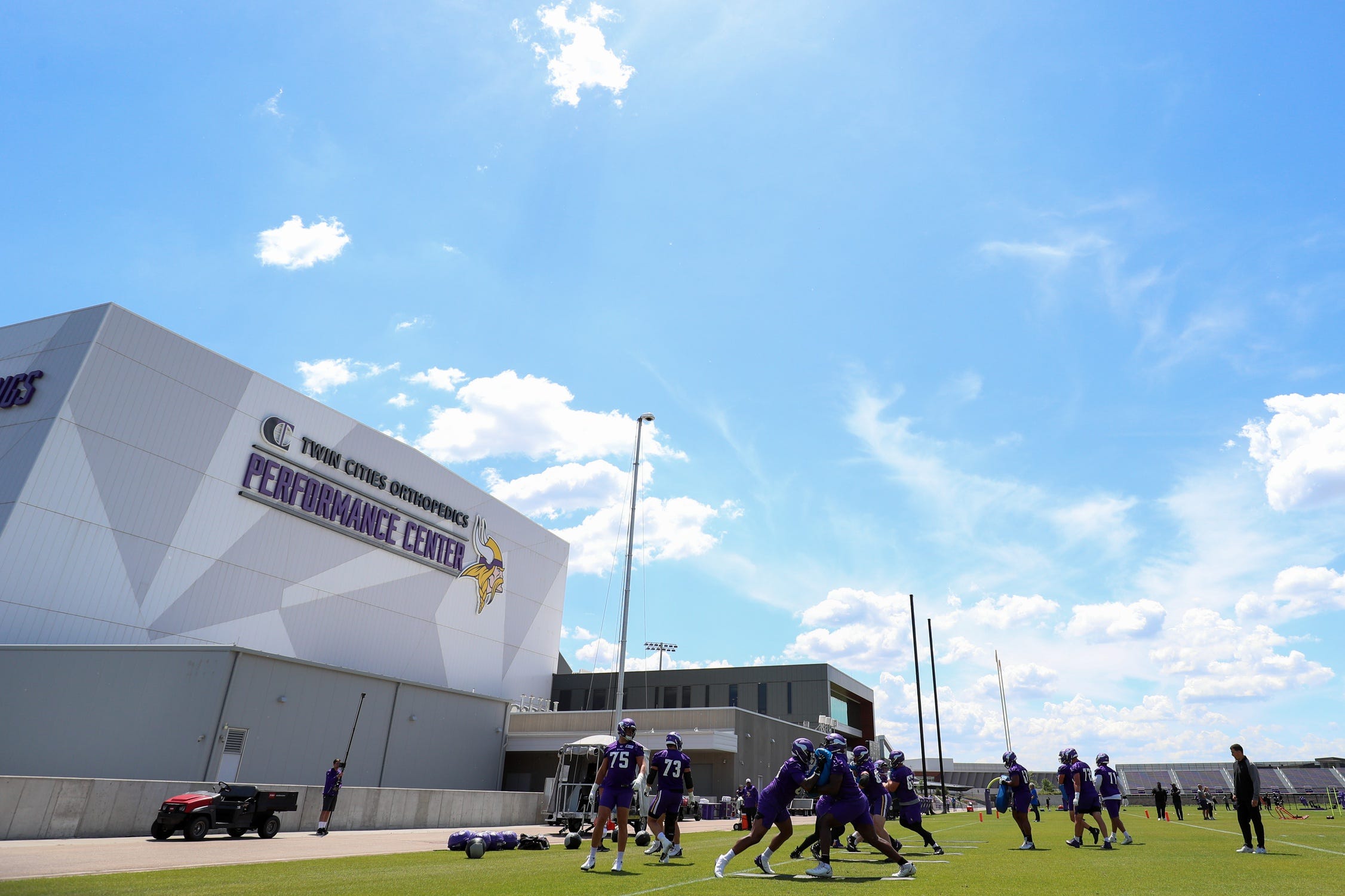
Aside from the major keys — i.e. the power structure and QB situation — Whaley explained that the next GM must have the ability to connect with everyone in the building. Whoever is taking over has to embrace the concept of being management and solving problems throughout TCO Performance Center rather than just focusing on scouting or roster construction.
“Ninety percent of your job is managing people,” Whaley said. “Managing players, coaching staff, ownership and scouting staff. What you end up doing is making decisions based on information given to you and past experiences. The higher you get up in football, the less of your time is doing what got you there, which is watching tape. You get a chance to watch tape but it’s not all you do. You have to talk to the head coach, you have to talk to ownership, you have to talk to PR. During the day, every single day as a GM, you’re going to deal with something that has nothing to do with football….you have like 150 people and there are going to be issues. Since you are overseeing it, you have to deal with those issues, which takes you away from that other stuff.”
Even if the GM does end up with final say, Whaley emphasized the importance for the next GM to surround themselves with people that aren’t going to be yes-men. The leader of the franchise should aim to build enough trust within the front office that opinions can be shared and decisions made together.
“Buddy Nix would say to me, ‘if you’re always going to agree with me, then I don’t need to pay you, I’ll just take your salary,’” Whaley said. “But whatever decision we make, it’s a team decision and you get behind it. Internal debate, external unity. I want everybody on the staff to give me their opinion and sometimes if I’m on the other side, I may go with the majority and trumpet it as our decision.”
“You have to empower your people for them to feel that they can come to you and give you what they truly believe without fear of retribution or fear of not being heard.”
How the Vikings sort all of these issues out will be revealed in the coming months when they make a hire.
But what we can see clearly from Whaley’s insight is that ownership’s decisions must come along with intentional directives and the situation is far more complex than simply hiring someone just to sign free agents and draft players.
Any reason they wouldn't just make Rob Brz. the guy?
The absolute best thing the Vikings can do this off-season is find a desperate team that will trade a 2027 1st to move up this year. Taking JJMC didn't work, that sucks, but the solution is to try again in 2028, and having two no. 1s would facilitate doing so.
Whaley's suggestion that it's actually possible to anticipate QB draft classes years in advance is more than a little suspect. Teams aren't good at IDing QBs in the year they are drafted, much less even farther in advance. To wit--guess which GM originally held the pick that was used on Mahomes, and traded it away?
Fun fact: the last QB that was the first one taken in his draft *and* won a SB with the team that drafted him was P. Manning, who was drafted in 1998. Finding a QB is difficult; the only useful strategy is to keep trying until finally landing one.